• Skip to main content
  • Skip to footer
  • Facebook
  • Google Business
  • Email

Insurance For Over 65

Serving Georgia, Alabama, and Florida

  • Home
  • About
    • Monthly Newsletter
  • Blog
  • Testimonials
  • Our FAQ Section
    • Medicare FAQ
    • What You Should Know About Medicare and HSA’s
    • 2026 Medicare Costs
    • How Do You Change Medicare Plans?
    • Life Insurance FAQs
  • Contact

Uncategorized

January 10, 2019 By Greg Nicholaides

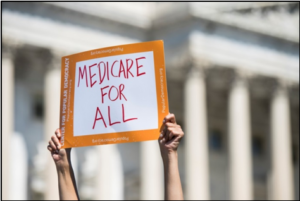
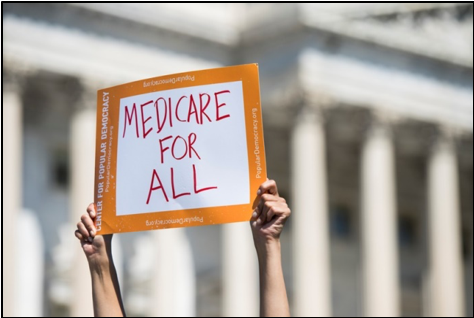
Is Medicare-For-All the Answer?

The Trump administration’s top Medicare official recently slammed the federal health program as riddled with problems that hinder care to beneficiaries, increase costs for taxpayers and escalate fraud and abuse.

Seema Verma, administrator of the Centers for Medicare & Medicaid Services (CMS), said those troubles underscore why she opposes calls by many Democrats for dramatically widening eligibility for Medicare, now serving 60 million seniors and people with disabilities, to tens of millions of other people.

“We only have to look at some of Medicare’s major problems to know it’s a bad idea,” Verma told Health Insurance Executives at a meeting in Washington.

CMS lacks the authority from Congress to operate the program effectively, Verma said, which means it often pays higher-than-necessary rates to doctors and hospitals and can’t take steps used by private insurers to control costs.

“We face tremendous barriers to supporting and bringing innovation to Medicare, and it literally takes an act of Congress to add new types of benefits for the Medicare population,” she added.

Since Medicare was approved in 1965, Congress has held power over eligibility and benefits — largely to control spending. That has meant efforts to expand services can get weighed down by partisan politics and swayed by lobbying groups, which significantly delay changes. One example: Congress didn’t add a pharmaceutical benefit to Medicare until 2003 — decades after drugs became a mainstay in most treatments.

Advocates for seniors have called for adding vision and dental benefits for many years, but the proposals have gotten little traction because of cost concerns.

Another problem, according to Verma, is that her agency reviews less than 0.2 percent of the more than 1 billion claims that Medicare receives from providers. “That is ridiculously low,” she said.

Verma also lamented the traditional Medicare program’s limited ability to require doctors and hospitals to get prior authorization from the federal government before performing certain procedures. That process — which has been routine for decades in the private sector — can lead to higher improper payments to doctors and more fraud and abuse, she said.

Jonathan Oberlander, a professor in the department of health policy and management at the University of North Carolina-Chapel Hill, agreed with Verma that “Medicare is not always nimble, particularly in adjusting benefits,” and officials have long complained that Congress micromanages the program. Still, he added, “with a program as large and important to Americans as Medicare, it is perfectly appropriate for Congress to weigh in on the addition of new benefits, especially since taxpayers will bear the costs of those changes.”

Verma for months has spoken out against the “Medicare-for-all” proposals pushed by Sen. Bernie Sanders (I-Vt.) and a growing chorus of Democrats. But her 35-minute address to the meeting of the trade group America’s Health Insurance Plans marked the first time she listed the litany of problems with Medicare, which she has run since March 2017.

Proponents of “Medicare-for-all” are reacting to problems caused by the Affordable Care Act, she said, and should know expanding Medicare will worsen the program’s existing challenges of controlling costs and improving care.

“But their solution is literally to do more of what’s not working,” she added. “It’s like the man who has a pounding headache, who then takes a hammer to his head to make it go away.”

Verma’s comments, however, overlooked the key leadership role that Medicare plays in the health sector, which is often emulated by private insurers, Oberlander said.

“In payment reform, Medicare has a record of being a leader and innovator,” he said. “For all of their supposed advantages, private insurers pay much higher prices than Medicare does for medical services. Verma ignores the fact that Medicare’s price regulation has produced substantial savings.”

Although Verma heavily criticized the traditional Medicare program, which covers two-thirds of enrollees, she boasted about how she and the Trump administration were running Medicare Advantage, the fast-growing alternative program that is operated by private insurers such as UnitedHealthcare, Aetna, and Humana.

More than 20 Million Medicare beneficiaries are enrolled in these plans, which often cost members less than traditional Medicare and have additional benefits. But they generally require members to use only the plan’s network of providers.

“Medicare Advantage represents value for our beneficiaries and taxpayers,” Verma said.

She touted a 2019 CMS initiative that will for the first time allow the Advantage plans to offer supplemental health benefits that go beyond traditional dental and health services. These include adult day care, in home support services and meals.

It is “one of the most significant changes made to the Medicare program” and “will have a major impact” on improving health for plan members, she said.

But the private plans have taken a cautious approach to adding those benefits.

About 270 Medicare Advantage Plans— or fewer than 10 percent of the total — have so far agreed to offer these services in 2019.

‘Greg Says’believes that before serious consideration is given to expanding the eligibility age for the Medicare program, much more needs to be done to reduce the waste, fraud, and abuse that currently amounts to more than $60B a year.

By Phil Galewitz, Kaiser Health News

October 16, 2018 

Filed Under: Uncategorized

January 10, 2019 By Greg Nicholaides

Medicare Part D Plans Should Step Up on Generic Drug Utilization, CMS Administrator Says

In a speech at a University of Southern California-Brookings Institution event, Seema Verma, Administrator of the Centers for Medicare and Medicaid Servicespointed to 2016 figures showing more than $1 billion in missed savings. 

By Alaric Dearment

MedCity News – Oct 21, 2018

Medicare Part D plans must do more to encourage generic drug utilization as statistics show patients spending significant sums on branded drugs when generic alternatives are available, the head of the agency that runs Medicare said Thursday.

Speaking at a University of Southern California-Brookings Schaeffer Initiative for Health Policy event, Centers for Medicare and Medicaid Services Administrator Seema Verma pointed out that while 90 percent of prescriptions dispensed in the US are for generic drugs, in 2016 Medicare Part D beneficiaries spent $1.1 billion in out-of-pocket expenses for branded drugs that have comparable generics. “So savings for patients are being left on the table,” she said. Additional barriers stand in the way of full generic utilization, she added. “So stay tuned for more from us on that issue.”

The remarks relate to a broader effort by the Trump administration to lower the costs of prescription drugs, costs that Verma pointed out are – in the case of Medicare – growing rapidly, from 17 percent of Medicare’s total budget in 2012 to 23 percent in 2016. She emphasized that encouraging market competition would be the means by which costs were reduced rather than what others have suggested, such as allowing Medicare to directly negotiate drug prices with manufacturers.

The Food and Drug Administration has also encouraged generic competition, in part by publishing alistof branded drugmakers that it says use restrictive means – such as Risk Evaluation and Mitigation Strategies – to thwart generic competition. Another possible means is to crack downon manufacturers’ use of citizen petitions to delay generic entry.

Other initiatives, like the proposal to require manufacturers to include list prices in ads for their products, have sparked debate. A legal expert said the First Amendment would not likely protect drugmakers from having to include such information in their ads. However, another disputed whether the administration’s move would actually result in lower drug prices, adding that it would instead probably create confusion among consumers and potentially discourage people from taking medicines.‘Greg Says’believes one of the highest priorities for the CMS needs to be how to control the rising cost of prescription meds. It will take a combined effort of the government, drug manufacturers and insurance companies to reduce the cost of prescription drugs

Filed Under: Uncategorized

January 10, 2019 By Greg Nicholaides

Bankruptcy Rates Among Seniors on the Rise

According to a recent article in BenefitsPro.com,“Bankruptcy is claiming more older Americans.”  This is heartbreaking news, but undoubtedly true.  The subhead reads, “The number of Baby Boomers filing bankruptcy has tripled since 1991,due in large part to higher medical bills, lower pensions and lack of savings.  Older adults represent an increasing percentage of bankruptcy filers, increasing from 2.1 percent in 1991, to 12.2 percent today.”

According to the article, “Older Americans report they are struggling with increased financial risks, namely inadequate income and unmanageable costs of healthcare, as they try to deal with reductions to their social safety net.  Simply because of their age, this group is less able to effectively respond to the shifting risks.”

“Study data indicate that between February of 2013 and November of 2016, there were 3.6 bankruptcy claims filed per 1,000 people aged 65 to 74.  Yet 27 years ago there were only 1.2 claims per 1,000 in the same age bracket.  The Social Science Research Network study asked bankruptcy seekers what drove them to it. Nearly 75 percent cited debt collectors; two thirds said their income had fallen and approximately 60 percent laid the blame on unmanageable medical bills.”

 ‘Greg Says’thinks that independent agents like myself need to do a better job of educating seniors regarding how best to protect their financial assets from the rising costs of healthcare. Yes, understanding all of the protection options is challenging and yes, most seniors aren’t prepared to do that on their own.  That’s why it’s so important for seniors to seek the freeadvice available from certified independent agents in order to be best protected from the financial trauma associated with the high costs of healthcare today.

Filed Under: Uncategorized

November 8, 2018 By Greg Nicholaides

Short-Term Health Plan Rule Change

The Centers for Medicare and Medicaid Services (CMS) on Aug. 1 extended the length of time you can keep a short-term policy from just 90 days to one year. In addition, you’ll be able to renew the same short-term policy annually for up to three years.

Short-term, limited-duration insurance is a type of health insurance coverage that was primarily designed to fill gaps in coverage that may occur when an individual is transitioning from one plan or coverage to another plan or coverage, such as in between jobs. This type of coverage is exempt from the definition of individual health insurance coverage under the Patient Protection and Affordable Care Act (PPACA) and is therefore not subject to the PPACA provisions that apply to the individual market.

This is good news for families and individuals wrestling with soaring health insurance premiums: The federal government just made it easier to buy and maintain lower-priced, short-term health insurance. The changes are the latest tweaks to the Affordable Care Act (ACA or Obamacare) made by the Trump administration aimed at giving middle-class consumers access to more affordable health insurance. The announcement reversed a 2017 Obama-era rule that had reduced the coverage window of short-term insurance from one year to 90 days.

Short-term health insurance is 80 percent cheaper than non-subsidized, Obamacare coverage, according to a study eHealth published in August. The same study found that the average monthly cost of ACA insurance for a family of four that didn’t qualify for an Obamacare subsidy was $1,376 — up 15 percent from 2017 and more than 60 percent higher than the same policy in 2014, when Obamacare was launched.

“We continue to see a crisis of affordability in the individual insurance market, especially for those who don’t qualify for large subsidies,” said CMS Administrator Seema Verma in a statement announcing the rule change. “The final rule opens the door to new, more affordable coverage options for millions of middle-class Americans who have been priced out of ACA plans.”

Short-term health plans are cheaper, in part, because they aren’t required to include all of the benefits mandated by the ACA and, as the name implies, they’re only guaranteed for a limited amount of time. The plans originally were designed for people facing temporary gaps in medical coverage, and this remains the primary reason people buy short-term policies.  But a growing number of consumers are turning to the policies as a longer-term solution as premiums for non-subsidized ACA plans continue to rise.

‘Greg Says’ considers short-term health insurance plans to be a credible alternative to ACA-compliant plans particularly for those 63 and 64, approaching Medicare.  These plans are under-written so they’re not available to those with serious health issues and they exclude pre-existing conditions.  But for those able to qualify, they have lower premiums and lower deductibles than the ACA-compliant plans.

Filed Under: Uncategorized

November 8, 2018 By Greg Nicholaides

Hospitals To Post Prices Online Under New Trump Administration Rule

The rule, finalized Thursday by the Centers for Medicare and Medicaid Services, is part of the Trump administration’s goal toward “value-based care,” which aims to reduce the costs of healthcare while improving outcomes.

Hospitals will be required to post the prices they charge for surgeries and other medical procedures online under a new Trump administration rule.

The rule, finalized Thursday by the Centers for Medicare and Medicaid Services, is part of the Trump administration’s goal toward “value-based care,” which aims to reduce the costs of healthcare while improving outcomes. Officials hope to be able to drive down costs by showing patients more information about what different medical procedures will cost, and at times encourage them to shop around.

Previously, CMS required that hospitals make the information available to anyone who asks for it. Under the new rule, hospitals will need to update the prices every year beginning Jan. 1, 2019.

“The agency is considering future actions based on the public feedback it received on ways hospitals can display price information that would be most useful to stakeholders and how to create patient-friendly interfaces that allow consumers to more easily access relevant healthcare data and compare providers,” CMS said in a statement.

The posted prices are different than what most patients and health insurance companies pay for care, because each insurer or government payer such as Medicare negotiates payments.


by Kimberly Leonard, The Washington Examiner

August 03, 2018


Filed Under: Uncategorized

  • « Go to Previous Page
  • Page 1
  • Interim pages omitted …
  • Page 35
  • Page 36
  • Page 37
  • Page 38
  • Go to Next Page »
  • Facebook
  • Google Business
  • Email

Copyright © 2026 | Insurance For Over 65