
• Skip to main content
  • Skip to footer
  • Facebook
  • Google Business
  • Email

Insurance For Over 65

Serving Georgia, Alabama, and Florida

  • Home
  • About
    • Monthly Newsletter
  • Blog
  • Testimonials
  • Our FAQ Section
    • Medicare FAQ
    • What You Should Know About Medicare and HSA’s
    • 2026 Medicare Costs
    • How Do You Change Medicare Plans?
    • Life Insurance FAQs
  • Contact

Medicare

April 24, 2018 By Greg Nicholaides

“Admitted” or “Under Observation”

Why It’s Important to Know the Difference Between Being “Admitted” to the Hospital and Being “Under Observation”

Medicare patients in a hospital seldom know whether or not they’ve been “admitted” to the hospital, or are under “observation”. Being admitted means that the hospital stay will be coded as a Part A claim. Being “under observation” makes it a Part B claim. In addition to higher cost-sharing responsibilities for the patient, when coded as “under observation”, there are no benefits available to help with the cost of rehab in a Skilled Care Facility following a hospital stay. This can be financially devastating for those requiring rehab after a surgery, heart attack, or stroke.

A patient shouldn’t have to question whether or not they’ve been admitted. It’s reasonable to assume that if you are in the hospital overnight, you’ve been admitted. The last thing in a patient’s mind is their official status in the hospital – as if they would even know to ask about it in the first place. Thankfully, that information will now be available to them within 24 to 36 hours after becoming a patient.

Under the recently enacted Notice of Observation Treatment and Implication for Care Eligibility Act (NOTICE Act), hospitals are now required to provide notification to individuals receiving observation services as outpatients for more than 24 hours. This notice informs the patient that being coded as observational means that their stay will result in a Part B Medicare claim, which results in a higher charge to the patient as in a copay and 20% of the Medicare-approved amount for most doctor’s services.

Although this is a good first step, it doesn’t solve the problem of rehab services not being covered by Medicare at all because the original hospital claim was coded as a Part B claim. At least now, however, the patient must be made aware of their official status while in the hospital and the resulting coding of their hospital claim to Medicare.

Filed Under: Medicare

April 9, 2018 By Greg Nicholaides

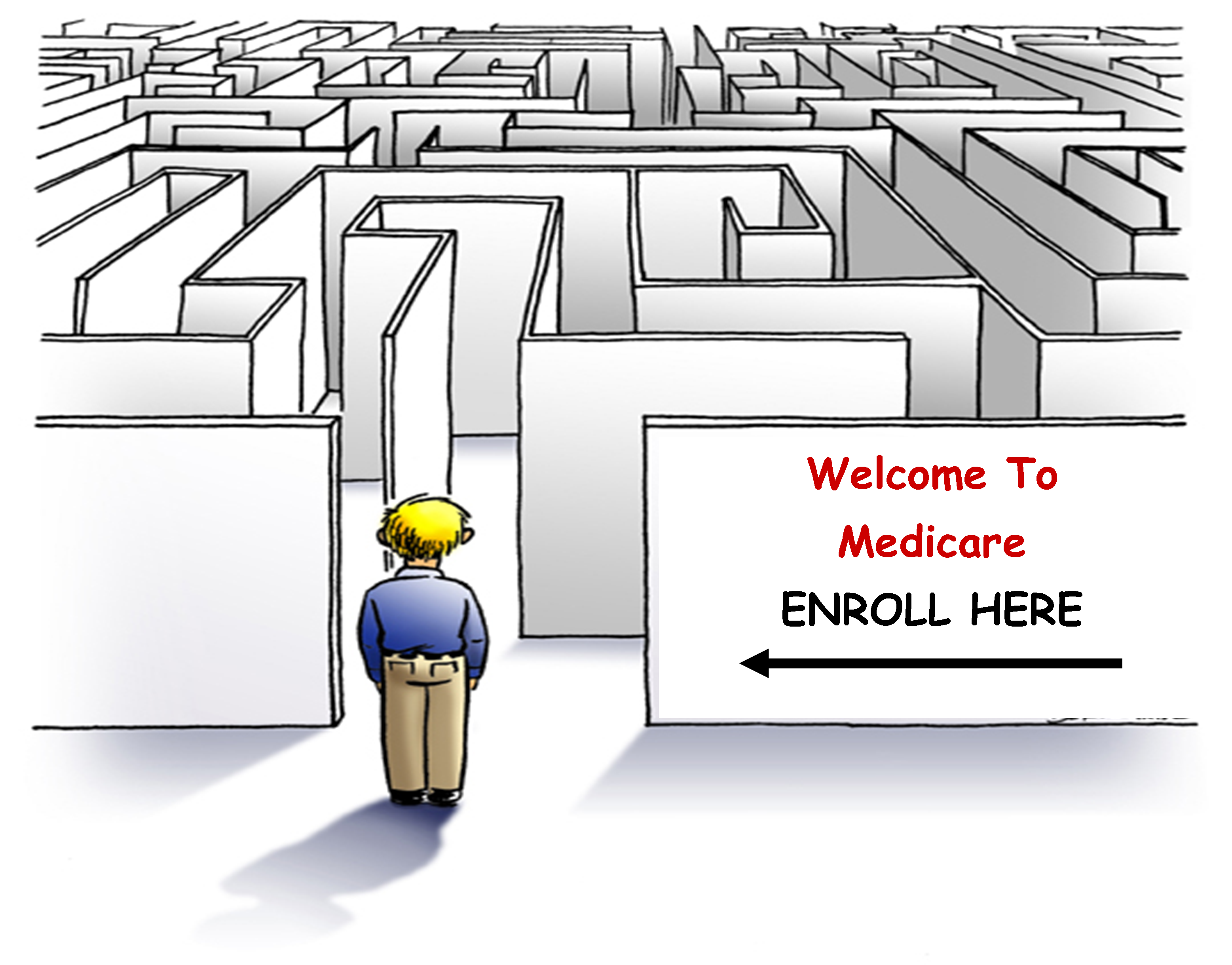
Medicare Enrollment

Filed Under: Medicare

March 28, 2018 By Greg Nicholaides

Medicare Advantage versus Medicare Supplement Plans:

I’m often asked, “What’s better, Medicare Advantage Plans or Medicare Supplement Plans?”  The answer is – “It Depends”.  There are a number of factors that must be considered before we can know which type of plan is best for you.

The first thing to do, however – is to get educated on how these two types of plans are fundamentally different:

A Medicare Supplement plan does what its name implies – it “supplements” Original Medicare Parts A and B.  Claims for your hospital and physician services are filed with Medicare.  The Medicare-approved portion of those claims that Medicare doesn’t pay, such as copays and your 20% co-insurance, are sent to your Medicare Supplement insurer to be paid for you according to the terms of your particular supplement plan.  This is why these plans are sometimes called Medigap plans – they cover the coverage gaps in Original Medicare.  For this supplemental coverage, you’ll pay a monthly premium which will increase as you get older.

A Medicare Advantage plan combines Medicare Parts A, B, and D (prescription drug coverage) under a single plan whereby all of your Medicare claims are sent directly to the insurer, not to Medicare.  The insurer will pay the Medicare-approved portion of those claims and you will be billed by the healthcare provider for any resulting copays and coinsurance.  In that respect, it’s just like Original Medicare except for the fact that your exposure to copays and coinsurance is limited to an annual maximum out-of-pocket limit which varies by the insurer (roughly between $6,000 and $7,000 per year).  Many of these Advantage plans are offered at a $0 monthly premium particularly in and around large metropolitan areas.  The insurers can afford to do this because Medicare pays them as much as $1,000 per month for each Medicare enrollee that they take on.

In my opinion, no Medicare enrollee should be without either a Medicare Advantage or Medicare Supplement plan.  Why?  Consider what your financial exposure would be if you only had Original Medicare Parts A, B, and D and you required heart surgery.  The American Heart Association says that the average cost of heart surgery in the US is $62,509.  In that case, the 20% Part B coinsurance alone would be over $12,500.  Add to this your copays and coinsurance associated with inpatient hospital services, related prescription drugs, and post-operative therapy and you could be left with tens of thousands of dollars in medical bills.

If you are within your Medicare Initial Enrollment Period (IEP, which is 3 months before to 3 months after your 65th birthday) and you have a chronic health condition such as cancer, COPD, rheumatoid arthritis, ulcerated colitis, or diabetes, I would suggest enrolling in a Medicare Supplement plan.  Likewise, if you’re within your IEP and you expect to need expensive surgery within the next 12-24 months, a Medicare Supplement plan is probably a good choice.

If you are relatively healthy and have a tight budget for healthcare expenses, you may be a good candidate for a Medicare Advantage plan.  Many of these plans are offered with $0 monthly premiums and include benefits that Medicare doesn’t offer such as partial coverage for dental, vision, and hearing services including the cost of hearing aids.

There are other considerations that enter into your decision to go with either a Medicare Supplement or a Medicare Advantage plan which can add complexity and confusion to your decision.  What you do can have a critical impact on your exposure to financial risk which is why you should seek the assistance of a licensed independent agent.


Filed Under: Medicare, Medicare Advantage, Medicare Supplement

March 28, 2018 By Greg Nicholaides

I Have Good News and I Have Bad News:

There is great news for Medicare enrollees, and a bit of caution regarding scammers.  The good news is that Medicare will be sending out new Medicare cards to each Medicare enrollee.  The cards will arrive sometime between April 1st of this year and will be completed by April 1st of next year.

The new cards will not have the enrollee’s Social Security number on them, as they do now.  This is a major accomplishment for Medicare and is being done to help stop identity theft via Social Security identification numbers.  This has been a big problem nationally and can be very damaging for Medicare enrollees who have had their cards compromised by internet bandits.

The new cards will have an encrypted 11 digit number, that even the cardholder won’t be able to “unencrypt.”  So that is good news.  I understand that the new cards will be sent out to Medicare enrollees in Georgia sometime after June 1st this year.

Often there’s a flip side to good news.  The bad news is that Medicare scammers are trying to take advantage of seniors while Medicare rolls out the new Medicare ID card program.  There are two primary methods involved.

First, scammers are phoning Medicare recipients, sometimes identifying themselves as Medicare or “government” officials, and telling them that the new cards are coming out, but that the enrollee will have to spend anywhere from $30-50 to get their new card.  That’s a lie – there is no charge for the new cards – furthermore, Medicare never uses the phone to contact people – it only uses the US Postal Service to communicate.

The second technique is for the scammer to say that they have a Medicare Advantage Prescription Drug Plan available, but then they request personal Medicare information so that the new plan can be utilized.  This is also bogus.  Don’t fall for this.  Medicare information is personal, and the scammers simply use it for other illegal activities.

So, if you receive one of these calls, just hang up, and report the activity with a call to 1-800-Medicare.  The scammers are well-trained in intimidation and persistence techniques but don’t yield to the pressure – Just say No and hang up.

Filed Under: Medicare

  • « Go to Previous Page
  • Page 1
  • Interim pages omitted …
  • Page 3
  • Page 4
  • Page 5
  • Facebook
  • Google Business
  • Email

Copyright © 2026 | Insurance For Over 65